
December 8, 2025
Rebound like a Pro
There are two kinds of rebounds. The ones that happen by accident, sluggish boxes, flat positioning, late reactions. And the ones that are earned: hustle, timing, positioning, heart. The difference between them often decides games.
The video you’re about to watch captures everything that goes into elite level rebounding: boxing out, anticipating misses, reacting to the ball, controlling space, and locking down the boards under pressure.
Why Rebounding Still Matters
- Extra possessions win games. Each defensive rebound stops an opponent’s possession; each offensive rebound gives your team another shot. In close games, those extra chances matter more than any one big bucket.
- Momentum & morale. A big rebound, especially offensive can swing energy, silence the crowd, and give teammates confidence.
- Defense becomes offense. Controlling the glass often leads to transition opportunities. Reset = quick push = easy scoring.
- Limits second-chance points for opponents. Defensive boards kill second-chance hopes, stopping rhythm and forcing opponents to reset.
What the Video Teaches
From the video (see link below), these core principles stand out:
- Box out before the shot: Good rebounders anticipate the shot and start boxing out before the ball leaves the shooter’s hands.
- Strong, wide base: Balanced stance and strong lower body base allow you to hold position even under contact.
- Fight for position, inside space first: Winning the “inside spot” beats jumping ability 9 times out of 10.
- React to the flight of the ball, don’t just jump: Read the arc, go to the right spot, time the jump, don’t just rely on athleticism.
- Secure the ball with two hands, then land, don’t reach out mid-air: Build control before worrying about outlet passes.
- Box out, then rebound, then protect: Even if you don’t grab it, making the opponent miss matters.
- Fight for second-chance rebounds (offense), crash with purpose: Know where the ball tends to come off the rim and go there.
- Use physicality legally, leverage > strength: A strong position and smart hip placement beats brute force.
How to Practice to Get Better at It
Here are some drills or mindset shifts you can use based on the video’s teaching:
- Rebounding 1-on-1 drills: Jump against a partner box out before the shot, scrap for position, battle for the ball.
- Shot-clock rebound drills: Coach fires a shot, rebounder fights contact, grabs the ball, and immediately outlet-passes. Simulates game pressure.
- Weak-side rebound rotation drills: Practice jumping to help, then rotating to the glass, communicating, and boxing out effectively.
- Film study: Watch your games/rebounding clips. Mark every missed rebound. Ask “Why didn’t we get that?” and “Where should we have been?”
- Conditioning with contact: Real rebounding requires strength, endurance, and balance simulate contact during scrimmages and rebounding drills.
Mindset: Rebounding is a Habit, Not an Accident
Great rebounders treat every missed shot as a new offensive or defensive action. They don’t wait for the ball. They attack the glass. Rebounding is not glamorous it’s gritty, physical, and often dirty. But over a season those extra possessions add up.
November 13, 2025
Dennis Rodman: The Science Behind Rebounding Mastery
Rebounding in basketball is often associated with height, strength, and vertical leap. But Dennis Rodman proved that relentless effort, precise technique, and extraordinary basketball IQ can outperform pure physical advantage. In this video breakdown, we explore how one of the NBA’s undersized forwards consistently dominated the glass, often against opponents a foot taller than him.
Rodman’s rebounding mastery begins with the fundamentals: boxing out. While most players learn to create separation by positioning themselves between the basket and their opponent, Rodman elevated this to an art form. He anticipated shots before they left the shooter’s hands, then used his body to anchor against defenders, establishing a commanding presence in the paint. His technique wasn’t just physical; it was mental. By reading shooters’ tendencies and understanding angles, he often predicted where the ball would land before anyone else on the floor.
One of Rodman’s signature methods was “anchoring.” He would gain position early, secure it with impeccable balance, and hold off taller players by maintaining leverage and anticipation. This allowed him to secure rebounds in traffic with confidence, turning what seemed like an impossible matchup into a clear advantage. He also made frequent use of one-hand grabs, snatching the ball away from both defenders and unsuspecting teammates, showcasing agility and quick reflexes that few others possessed.
Rodman’s rebounding genius wasn’t limited to conventional methods. He had an uncanny sense of timing and trajectory, knowing exactly when to leap, when to slide, and when to tip the ball to himself or a teammate. Watching footage of him against superstars like Patrick Ewing or Shaquille O’Neal, it becomes evident that his success was a combination of anticipation, movement, and relentless effort. He wasn’t relying on brute force; he was reading the play, understanding spacing, and exploiting even the smallest openings.
Some of his most famous rebounding moments illustrate this perfectly. In the 1996 NBA Finals, for example, Rodman consistently outjumped taller defenders, often positioning himself in ways that seemed counterintuitive, curling around bodies, timing his jumps with precision, and using subtle taps to secure possession. Each rebound was the product of technique, spatial awareness, and a refusal to be outworked.
This video breakdown also highlights how Rodman approached rebounding as a teachable skill. Coaches and players can learn from his example: controlling space, anticipating shots, using body leverage, and employing both hands effectively are strategies that any player can practice. Rodman proves that rebounding is less about who is tallest and more about who thinks, moves, and reacts best.
Dennis Rodman’s story is a reminder that basketball is as much a mental game as it is physical. His rebounding mastery demonstrates that with vision, technique, and relentless effort, even an undersized player can dominate the paint and change the outcome of games. For anyone looking to improve on the boards, studying Rodman is not just inspiring, it’s educational.
October 26, 2025
How to Become a Dominant Rebounder
Great defense starts with rebounding, and consistent boxing out is the foundation. Here’s how coaches can help players improve individually and as a team:
1. Emphasize Discipline
- Box out on every possession, no exceptions.
- Stay alert and anticipate second-chance opportunities.
- Repetition builds muscle memory drills that enforce consistency are key.
2. Teach Angles and Anticipation
- Show players how the ball typically bounces off the rim from different spots on the court.
- Encourage them to position themselves strategically rather than just jumping randomly.
- Practice reading the shooter’s body and trajectory cues.
3. Team Rebounding Concepts
- Assign responsibilities for weak-side and strong-side rebounds.
- Communicate players need to know who is boxing out whom.
- Encourage helping teammates crash the boards while maintaining defensive spacing.
4. Make It a Mindset
- Winning at a high level requires commitment to rebounding fundamentals.
- Celebrate effort and positioning as much as the rebound itself.
This video demonstrates all of these points in action, showing both the technical skills and the mental approach necessary to dominate the boards.
September 28, 2025
Developing Rebounding Fundamentals: Engaging Drills and Techniques
Rebounding is one of the most overlooked yet crucial parts of basketball. It’s not just about who jumps higher it’s about positioning, timing, anticipation, and mindset. Whether you’re coaching youth players or more advanced athletes, mastering rebounding fundamentals can make a huge difference in both offense and defense.
In this video, Jarrod Moore, Coach Development Manager for Basketball New South Wales, walks through engaging drills designed to develop these core skills. The exercises focus on boxing out, reading the flight of the ball, timing jumps, and asserting physicality without fouling. What makes this video valuable is the practical approach, it’s not just theory, you see the drills in action and how they translate directly to in game situations.
Why this matters:
- Offensive Rebounding: Players learn how to create space and read the defense to secure second-chance opportunities. This is critical for boosting your team’s scoring efficiency.
- Defensive Rebounding: Securing defensive boards ends opponent possessions and allows you to control the pace of the game. Proper positioning, anticipation, and aggressiveness are all reinforced in these drills.
- Skill Transfer: The drills simulate real game scenarios, helping players respond to live ball movement, rebounds off different types of shots, and contested situations.
Watching this video is a great resource for coaches who want to teach rebounding with intention. It’s structured, clear, and provides a roadmap to improve a fundamental skill that often decides games.
August 24, 2025
How to Box Out and Rebound
Rebounding is one of the most fundamental and game changing skills in basketball, yet it’s often overlooked in favor of scoring and flashy plays. In this video, coach Robert Bauer breaks down the essentials of boxing out and rebounding, teaching the proper footwork, body positioning, and mindset needed to control the glass.
Coach Bauer emphasizes that rebounding isn’t just about height or athleticism it’s about effort, discipline, and positioning. Learning to establish contact early, hold your ground, and pursue the ball with determination can turn any player into a valuable asset for their team.
Whether you’re a beginner looking to learn the basics or an advanced player wanting to sharpen your technique, these drills and teaching points are practical, clear, and highly effective. Strong rebounding creates extra possessions, prevents second chance points, and often becomes the difference between winning and losing.
Watch the video below to see Robert Bauer’s step by step approach to mastering this crucial skill.
August 19, 2025
Rebounding Fundamentals and Defensive Footwork with Torsten Loibl
Rebounding is one of the most overlooked yet game changing skills in basketball. Great defense isn’t complete until you secure the rebound, and great offense often begins with a second-chance opportunity on the glass.
In this video, Torsten Loibl former head coach of Japanese professional team Levanga Hokkaido breaks down the fundamentals of rebounding and defensive footwork. His teaching emphasizes simplicity, discipline, and technique over size or athleticism.
Key Teaching Points in the Video
- Box-Out Basics: Establish position early and create contact before the ball comes off the rim.
- Footwork Discipline: Staying low, balanced, and ready to react ensures defenders aren’t caught out of position.
- Second Effort Mentality: Rebounding is about toughness and persistence, not just the first jump.
- Transition Readiness: Securing the rebound is only the first step players must be ready to outlet and initiate fast breaks.
Why This Matters
At every level of basketball, teams that dominate the glass control possessions and momentum. Rebounding isn’t just about height it’s about effort, positioning, and mindset. By combining footwork drills with rebounding fundamentals, Loibl shows how to build habits that translate directly into game situations.
August 10, 2025
“Tagging Up”, Aaron Fearne’s Approach to Defensive Transition and Offensive Rebounding
In this video, we explore Aaron Fearne’s innovative “Tagging Up” concept a system designed to maximize offensive rebounding while maintaining strong defensive transition.
Fearne’s philosophy challenges the traditional idea of sending only a few players to crash the boards. Instead, he teaches all players to be involved in offensive rebounding, with the built in discipline to immediately recover and defend. The “tagging up” system ensures that every player knows their role, whether it’s sealing an opponent, locating their check, or sprinting back to stop the break.
The benefits are clear more second chance points, consistent pressure on the defense, and a seamless shift into transition defense. The teaching points behind this system emphasize awareness, communication, and the ability to read the flow of the game.
For coaches looking to boost their team’s energy, create extra scoring opportunities, and still protect against fast breaks, Fearne’s Tagging Up approach offers a modern, aggressive, and effective blueprint.
August 2, 2025
Rebounding & Physical Play: Owning the Paint, Winning the Game
Rebounding isn’t just about jumping higher it’s about positioning, anticipation, timing, and mindset. In this video, we break down how elite teams dominate the glass through tough, physical play, using real game footage to show exactly what to do, how to do it, and why it works.
Video Focus
This breakdown highlights:
- Box-out techniques from different positions on the floor (guards, wings, bigs)
- How to establish early inside position before the shot goes up
- Swim moves, seal ins, and displacement techniques
- Reading long rebounds and reacting first
- How physical contact is used within legal boundaries to gain an edge
- Real clips showing team rebounding systems, not just 1 on 1 battles
Why Rebounding Wins Games
- In FIBA and international play, second-chance points average between 10–15 per game often the difference in tight contests.
- A team that controls the glass usually controls the tempo. Offensive rebounds extend possessions; defensive boards allow fast break opportunities.
- Rebounding is also one of the best indicators of a team’s effort and toughness intangibles that don’t show up in the box score but win championships.
Coaching Emphasis
- Teach players to hit first, then pursue.
- Everyone rebounds not just the bigs. Guards must crash with purpose or sprint back in transition, depending on your system.
- Use rebounding drills that combine physicality, positioning, and conditioning.
- Reinforce that rebounding is part of team defense, and every missed box out is a potential breakdown.
Watch the video below to see how these principles are executed at high levels. Then take them into your practices because winning the rebound battle often means winning the war.
JULY 16, 2025
Rebounding Toughness: Compete, Read, and Finish the Possession
Rebounding isn’t just a hustle stat it’s a competitive skill that can shift the tone of a game. In this video, I present a progressive rebounding series that’s about way more than just boxing out. It’s about competing, reacting, and owning the next action.
These are not standstill drills. We start with 1v1 rebounding, build into 2v1, and then scale to 2v2 live reads. Every drill includes real time decisions, drive and kick scenarios, and closeout responsibilities making these reps transferable to actual game flow.
What These Drills Emphasize:
- 1v1 physicality and timing off the glass
- 2v1 rotations and recovery under pressure
- 2v2 drive & kick + rebounding under scramble
- Closeouts into rebounding; cover the shot, then finish the possession
- Teaching players to battle, read, and rebound through contact
These drills don’t just teach effort they teach reaction. You’ll cover multiple layers of the game: on-ball defense, closeout control, help rotations, and rebounding responsibility all in the same rep.
JULY 15, 2025
IMPORTANCE OF BOXING OUT AND MY FAVORUITE DRILLS
Many basketball players and coaches believe that unless you’re blessed with good height or jumping ability, you can never become a great rebounder. This isn’t true. While height and a big vertical jump definitely helps, being a great rebounder comes down to being able to read the ball and smart positioning.
Using effective box out drills during your practices can quickly teach even the shortest teams how to dominate the boards.
This will mean fewer scoring opportunities for the opposition, more shots for your team, and the benefit of keeping momentum on your team’s side.
Below are my top 3 favourite box out drills.
JULY 14, 2025
2 on 2 Battle of the Board Rebounding
How the Drill Works:
One player will continuously shoot from the top of the key while four players (2-on-2) battle to secure rebounds. When a player rebounds the basketball, they receive one point for their team and then must immediately pass the ball out to the shooter who will shoot again. The team who accumulates 10 points first is the winner
Purpose:
A competitive box out drill that will teach players the importance of establishing position early against their opponent. Players will practice reading the flight of the ball and will learn how to position themselves to give them the best chance of securing the rebound.
Setup:
- Five players at each basket.
- Two teams of two players.
- A shooter at the top of the key with a basketball.
- The two teams start inside the key.
Instructions:
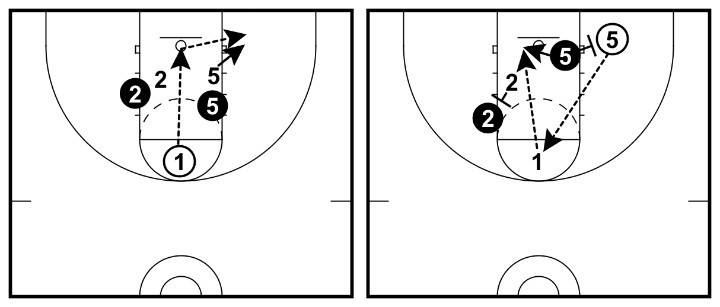
- The shooter at the top of the key starts the drill by taking a shot at the basket.
- As the shot is taken, the players inside the key fight for a rebound on either a make or a miss.
- The team who secures the rebound receives one point and must immediately pass the basketball back to the shooter at the top of the key.
- As soon as the shooter receives the ball, they shoot again.
- They players (who should have been fighting to establish position) will then battle for the rebound once again to accumulate points.
- Once a team reaches 10 points (or rebounds), they’re declared the winner.
Variations:
Shooting Distance – Depending on the age and shooting ability of the players you’re coaching, you can change the shooting distance. For younger players, get them to shoot from the free-throw line instead of the top of the key.
Number of Rebounders – Instead of 2-on-2, this drill can be used 3-on-3 or even 4-on-4.
Points Needed – Instead of needing 10 points to win, change this number higher or lower.
Coaching Points:
- Continuously monitor how physical the drill gets. While it is a toughness drill and you do want to allow them to compete, never let it get to the point of players potentially getting injured or wanting to fight each other.
- The player who rebounds the ball should always immediately call out the number of points their team has accumulated.
- Talk to your players about the importance of getting good rebounding position against their opponent as soon as possible.
- Even if the shot is made, the basketball is still live.
- Encourage your players to go up strong with two hands to grab the ball.
JULY 13, 2025
Continuous Weak-side Rebounding
How the Drill Works:
The first player will pass from the middle of the key out to one of the wings. They must then box out the opposite wing who will be sprinting in to grab a rebound. Whoever rebounds the basketball passes out to either wing while the player who didn’t rebound must box out the opposite wing.
Purpose:
This is a high intensity rebounding drill which will teach players how to sprint to make contact with their opponent, box out, and then pursue the basketball.
Setup:
- Players are divided into a line on each wing.
- One player starts in the middle of they key with a basketball.
Instructions:
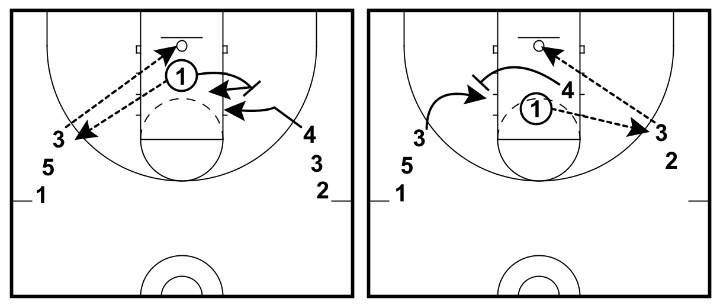
- The player in the middle of the key starts the drill by passing to the player at the front of the line of either wing who will shoot.
- As soon as they do this, the passer must attempt to box out the opposite wing who will be sprinting in to rebound the ball.
- Whoever rebounds the ball can choose to pass to either wing. Once they do, they join the back of the line they passed to.
- The player who didn’t rebound the ball must stay in the game and box out the opposite wing who will once again be sprinting in to rebound.
- The drill continues like this for a set amount of time.
Variations:
Individual Scoring – Players can keep tally of the amount of rebounds they have accumulated by themselves. The first player to achieve 7 rebounds is the winner.
Corners – Instead of starting the lines on the wings, players can start in the corners of the court.
Coaching Points:
- It’s incredibly important you encourage players to sprint across to make contact as early as possible with the rebounder sprinting in from the perimeter.
- The goal for the inside rebounder is to keep the perimeter player as far away from the rim as possible. This increases their chances of securing the ball.
- The basketball is still in play even if the shot is made.
- The player rebounding should be going up with two hands and attempting to secure the ball at the highest point of their jump.
JULY 12, 2025
4 on 4 DEFENSIVE DRILL
How the Drill Works:
Four defensive players attempt to prevent four offensive players from touching the basketball before it bounces on the floor after a player or coach shoots from the free-throw line.
Purpose:
A fun variation to regular box out drills that all players enjoy. Defensive players box out their opponents and use their body to keep good positioning and prevent the offense from getting around and rebounding the basketball.
Setup:
- 4 offensive players spread around midrange.
- 4 defensive players start inside the key.
- Coach or player has the basketball on the free-throw line.
Instructions:
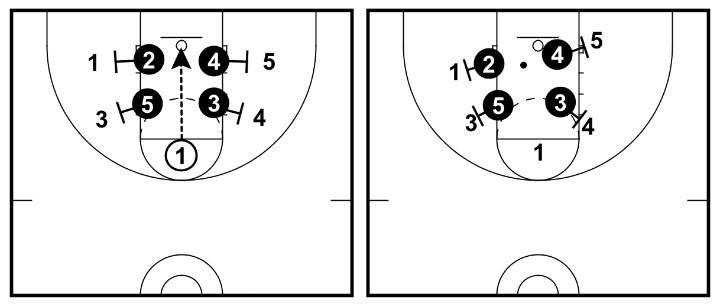
- A player starts the drill by shooting from the free-throw line.
- The defenders must immediately sprint out and get a body on the offensive players who are running in looking to grab an offensive rebound.
- Instead of pursuing the basketball after making contact, the defenders attempt to hold their box out and allow the basketball to bounce.
- If the defense succeeds, the rep is over. If the offensive team secures the rebound, the ball is live and they attempt to score.
Variations:
More or Less Players – This drill can be run with any number of players although I recommend either 2-on-2, 3-on-3, or 4-on-4 for best results.
Competition – Split the group up into two teams and award points for offensive rebounds before the basketball touches the floor and for the defense boxing out until the basketball bounces.
Coaching Points:
- The defenders must box out for as long as possible and the offensive players must pursue the basketball until they touch it. If the basketball can bounce more than once, even better for the defense.
- Defenders must seek the offensive player out and make contact before finding the basketball with their eyes. Use the forearm to make contact and the pivot around to box out.
- Defense must be strong with their arms out wide to prevent the offensive players from getting around the easily.
- Watch out for the offensive players pushing the defense in the back. Allow the players to be physical, but don’t let it get out of hand.
 fatihakser.ca